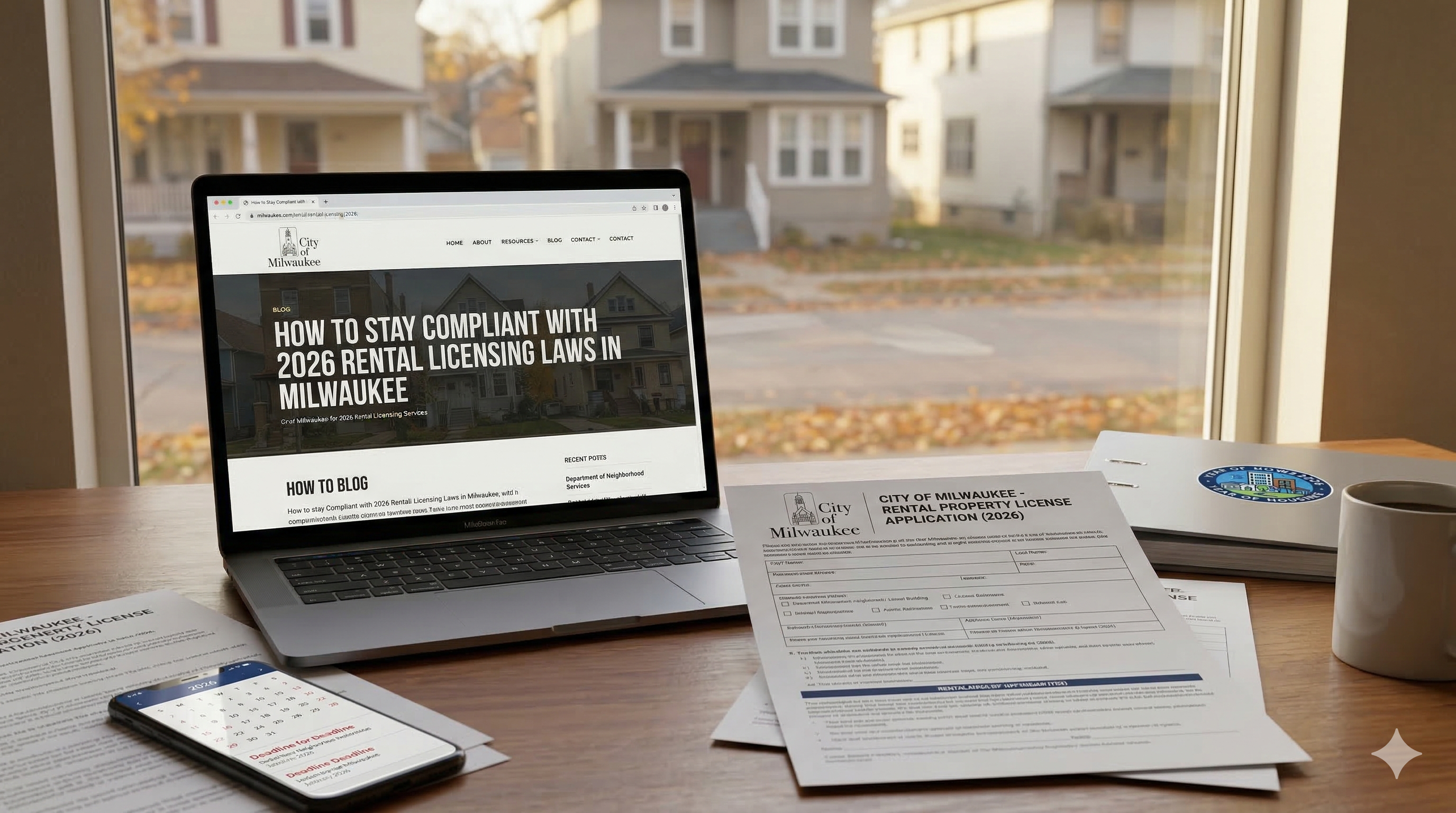
Owning rental property can be a strong long-term investment, but it also comes with evolving legal responsibilities. As we move into 2026, rental licensing laws continue to play a major role in how you operate your property, screen tenants, and maintain safe housing standards.
If you want to protect your income and avoid costly penalties, staying compliant is not optional. It is essential. In this guide, we will walk you through the key information on Milwaukee’s rental licensing requirements and how we can help you keep your property in compliance with local regulations.
Key Takeaways
Milwaukee rental properties must meet updated 2026 licensing requirements, including consistent inspections and documented compliance, to remain legally rentable.
Proactive and preventative maintenance reduces the risk of violations, failed inspections, and costly penalties.
Accurate financial tracking and organized operational records strengthen your position during audits and city reviews.
Working with experienced local professionals helps you stay aligned with evolving regulations and operate with confidence.
What Is Rental Licensing in Milwaukee?
Rental licensing in Milwaukee requires property owners to register and maintain a valid license for rental units. The city uses this process to ensure that properties meet health, safety, and building code standards.
If you own a single-family rental, duplex, or multi-unit building, you are responsible for maintaining compliance with:
Property registration requirements
Periodic inspections
Code enforcement corrections
Updated contact information
Timely fee payments
Failure to meet these obligations can result in citations, fines, or even suspension of your ability to legally rent the unit.
As regulations shift in 2026, you should review your property’s status and confirm that all licensing paperwork and inspections are current.
2026 Updates and Enforcement Trends
While authorization structures remain in place, enforcement efforts in Milwaukee have become more consistent and data-driven.
The city continues to focus on:
Habitability standards
Exterior property conditions
Lead safety compliance where applicable
Accurate occupancy limits
Timely correction of violations
Increased digital tracking means it is easier for the city to flag expired licenses or repeated violations. That makes proactive compliance more important than ever.
If you are an out-of-state investor or manage multiple units, staying on top of notices and inspection schedules can quickly become overwhelming. Reviewing strategies used by successful absentee owners can help you avoid compliance gaps, especially when you are not physically present to monitor the property.
Many landlords benefit from insights shared in resources like effective absentee management strategies that highlight practical risk reduction approaches.
Preparing for Rental Property Inspections
Inspections are one of the most critical components of licensing compliance. When the city schedules an inspection, you must ensure the property meets all required standards.
Common inspection focus areas include:
Smoke and carbon monoxide detectors
Safe electrical systems
Proper plumbing and water supply
Structural integrity
Functional heating systems
Safe egress and exits
You should conduct your own pre-inspection walkthrough before the official visit. Address minor repairs early rather than waiting for a mention.
Each time a tenant moves out, you also have an opportunity to evaluate the unit’s condition. Proactive repairs and consistent upkeep make inspections smoother and reduce the risk of violations. Partnering with a reliable tenant placement solution ensures that turnover periods are handled efficiently, giving you time to address maintenance needs before new occupants move in.
Maintenance as a Compliance Strategy
Maintenance is not just about keeping tenants happy. It is one of the strongest defenses against licensing violations.
Deferred maintenance often leads to:
Code complaints
Emergency repair calls
Failed inspections
Liability risks
When you take a preventative approach, you reduce the likelihood of city citations and protect your property’s long-term value.
You should implement:
Seasonal maintenance checklists
Routine property walkthroughs
Clear tenant reporting procedures
Documented repair timelines
Having a system in place makes it easier to demonstrate good faith compliance if questions arise. Detailed records of repairs, invoices, and communications show that you are actively maintaining safe housing conditions.
Recordkeeping and Financial Documentation
Licensing compliance is not only about physical property conditions. It also involves proper documentation.
You should maintain organized records of:
Licensing certificates
Inspection reports
Repair invoices
Lease agreements
Tenant communication
Rent payment histories
Clear financial reporting can also help you track licensing fees, inspection costs, and compliance-related expenses. Using structured owner reporting systems, such as professional owner accounting tools, gives you transparency and simplifies audits if the city requests documentation.
If you cannot quickly produce the required records, you may face unnecessary delays or inspections. Organized systems reduce that risk and allow you to respond confidently to inquiries.
Avoiding Common Compliance Mistakes
Even experienced landlords can run into compliance issues.
Some of the most common mistakes include:
Allowing licenses to expire
Ignoring minor violations
Failing to update ownership or contact information
Overlooking lead safety requirements
Not correcting the tenant caused damage quickly
Another frequent issue is assuming that once a property passes inspection, it will remain compliant forever. You must treat compliance as an ongoing responsibility rather than a one-time task.
The Role of Professional Support in 2026
As regulations evolve, many Milwaukee property owners choose to work with local professionals who understand current enforcement trends.
Professional support can help you:
Track licensing deadlines
Coordinate inspections
Manage repair timelines
Screen tenants carefully
Maintain proper documentation
When you align yourself with experts who focus on Milwaukee rental operations, you reduce the risk of costly oversights.
FAQs
Do I need a rental license for a single-family home in Milwaukee?
Yes. Most non-owner-occupied residential rental properties require proper licensing through the city, even if you only own one unit.
How often are rental inspections required?
Inspection regularity depends on property type and prior compliance history. Properties with repeated violations may face more frequent inspections.
What happens if I fail an inspection?
If you fail an inspection, you will receive a notice outlining required corrections. You must complete repairs within the specified timeframe and may need a reinspection.
Are there penalties for renting without a valid license?
Yes. Renting without an active license can result in fines, legal consequences, and possible court action. It may also impact your ability to collect rent legally.
How can I reduce the risk of tenant-related violations?
Thorough tenant screening, clear lease terms, and consistent property monitoring reduce the risk of tenant-caused damage that could trigger code issues.
Do licensing laws change often?
Regulations can evolve as the city updates housing standards and enforcement procedures. Staying informed and working with knowledgeable professionals helps you adapt quickly.
Stay Compliant and Protect Your Milwaukee Rental Investment With Residential Renters
Navigating rental licensing laws in Milwaukee does not have to be overwhelming. When you stay proactive with inspections, maintenance, and documentation, you protect both your income and your property’s long-term value.
At Residential Renters, we help property owners simplify leasing, streamline tenant placement, and maintain organized systems that support compliance in today’s regulatory environment. If you want to reduce risk and operate with confidence in 2026, our team is here to help.
Take the next step toward stress-free rental ownership and connect with us today to see how we can support your Milwaukee property goals.
